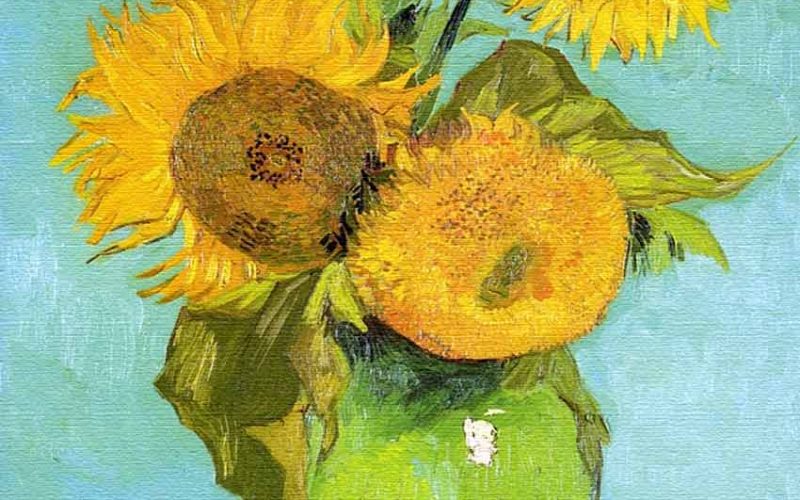
A good garden may have some weeds.
~Thomas Fuller
Does another “30 under age 30” achievement list make you wonder if you’re doing life wrong?
Does a story about a grandma who ran her first marathon in her 80s make your day?
If you’re a “late-blooming” adult, like I am, you’re not alone. We’ve got some exceptional company!
I’m not talking about people who started early and kept going, like Picasso, Kurosawa, or Joyce Carol Oates.
This blog celebrates people who don’t discover their creative passion until their mid-30s or later, or who realize it young but can’t pursue it until adulthood—Later Bloomers.
In this article, we first tackle the hard stuff and examine how early setbacks and poverty might affect late blooming. Then we explore the good stuff—multiple passions, unique learning patterns, and the lives of famous late bloomers.
How Early Setbacks Can Affect Late Blooming
 At age 10, Linda Bach stood by, helpless, while her father die of a heart attack.
She vowed to become a doctor so she could save other lives. At age 20, she graduated at the top of her college class with a microbiology degree and applied to medical school.
During her entrance interview, she faced a panel of six men. Their first question—did she plan to marry and have children?
“Yes,” she answered. “After I finish school and establish my practice.” One of the examiners said under his breath, “God, I’d hate to be your kids.” She didn’t get in.
Devastated, Linda asked her college counselor for advice. He didn’t see a problem. Why didn’t she just get married and have kids?
For a young woman in 1969 with no mentor, entering a male-dominated field seemed impossible. Linda felt rejection by two sources of authority—the review board and her counselor—foretold failure.
Today, thanks to the Internet, we can discover everything about anything. In the past, however, we depended on parents, teachers, and libraries to guide us. The quality of that guidance varied from place to place, individual to individual.
For the fortunate, it leads to success. For others, like Linda, its lack slammed the door to their dreams—but not forever.
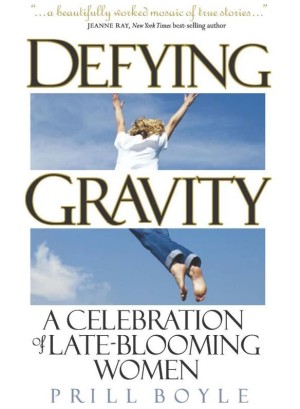
Linda Bach entered medical school at the age of 46. She is currently a doctor in private practice. Her story is told in Defying Gravity: A Celebration of Late-Blooming Women by Prill Boyle.
How Poverty Can Affect Late Blooming
Albert Einstein had an IQ of 150. Chris Langan’s IQ is so high that it can’t be measured. But you’ve probably never heard of him unless you’ve read Outliers by Malcolm Gladwell.
Some would say bad luck dogged Langan.
His car broke down and he couldn’t afford to fix it. He could hitch into town for afternoon classes, but the admin office wouldn’t let him transfer to the later sessions. His mother forgot to sign his scholarship application, so they rejected it.
His college took the hard line. They kicked him out.
Gladwell thinks that Langan could have turned things around if only he’d learned to negotiate with authority figures.
But that, and his “bad luck,” are symptoms of deeper problem—extreme poverty.
While growing up, food was a luxury. He owned only the clothes on his back. His stepfather beat him for eight years.
Langan’s brother explained,
I couldn’t get financial aid either. We just had zero knowledge, less than zero knowledge of the process. How to apply. The forms. Checkbooks. It was not our environment.
Langan might as well have been raised on Mars. The guy with an IQ higher than Einstein ended up as a Rhode Island bouncer for 20 years.
Savant Daniel Tammet speculates that an intersection between talent and delayed opportunity causes late-blooming:
If you’re born in a very poor environment, where you’re not given books and you’re not given good education and then subsequently doors are closed to you that are open to others who perhaps don’t have your talent…I could well imagine that throughout our history there are people who have come into their own relatively late in life.
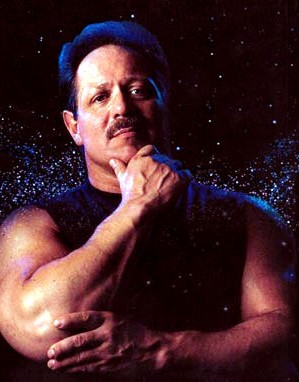
Langan now raises horses and hones his cognitive-theoretic model of the universe—a grand theory of all origins. Sometimes he gets oddly poetic. (“I just had a chance encounter with a garden slug, and it got me thinking about time.”)
But Langan will never be published in an academic journal, because he didn’t get the right credentials. Many of his would-be peers (with lower IQs) think he’s a crackpot.
Perhaps it doesn’t matter. He’s living his dream—a quiet life devoted to higher learning. And the Internet has become a great equalizer. One day Chris Langan’s name might be as recognizable as Albert Einstein’s.
The Truth About What We Choose to Become
Carl Jung wrote, “I am not what happened to me, I am what I choose to become.” A brave statement, but sometimes we do become what was done to us, a state known as post-traumatic stress disorder (PTSD). The National Institute of Health defines PTSD as
an anxiety disorder that can develop after exposure to a terrifying event or ordeal in which grave physical harm occurred or was threatened. Traumatic events that may trigger PTSD include violent personal assaults, natural or human-caused disasters, accidents, or military combat.
Psychotherapy recognized PTSD in the aftermath of Viet Nam. But PTSD doesn’t affect only veterans of war or victims of atrocities.
Children can develop PTSD after experiencing physical or psychological abuse or even playground bullying. PTSD symptoms can surface after learning about a traumatic experience second-hand.
The numbness, anxiety and emotional emptiness that characterize PTSD will kill the joy, passion and excitement necessary to bloom early.
But there is a great deal of hope.
Weeds are flowers too, once you get to know them.
~A.A. Milne
Recent media fixation on The Secret makes any discussion of hardship taboo. The “law” of attraction decrees if life doesn’t go your way, you didn’t visualize or believe with enough faith in the limitless universe.
What kind of law tells victims of rape, war, poverty, and other tragedies that they authored their own misfortune?
If youth has left scars, being told to “move on” or “get over it” is insulting. You may never get over it, but the world needs your special gift. Each person has one thing they must do that no one else can.
If this section rings true, you might want to consult a therapist to cultivate your gift. Or you might not.
But, no matter how thoughtful or wild, forthright or sneaky, typical or unconventional, you must find some way for your gift to triumph over what was done to you.
Specialization is a Recent Compulsion
During the Renaissance, humanism arose in revolt against the limits of Medieval education, which confined learning to law, medicine and theology.
The movement reignited interest in what we now call the humanities—classics, languages, literature, philosophy, arts of all types.
Many of our greatest minds were “Renaissance Men.”
Benjamin Franklin was a writer, printer, soldier, politician and diplomat. He invented bifocals, the lightning rod and the Franklin stove. Peter Mark Roget was a doctor, teacher, inventor, designer and compiler of the famous Thesaurus.
Specialization is a relatively recent compulsion.
Some people have wide-ranging passions. They have no desire to specialize because they’re driven by curiousity and wonder. In today’s world, they’re often denigrated.
Margaret Lobenstine calls this type of Later Bloomer a Renaissance Soul. She writes:
Renaissance Souls much prefer variety and combination over focusing all their energies on one thing. They prefer widening options by opening more and more doors, to narrowing choices by specializing and sub-specializing.
After succeeding in one area, the Renaissance Soul will seek a completely new adventure instead of accepting a promotion or job hopping to a higher salary.
This might be why many Later Bloomers eventually become writers.
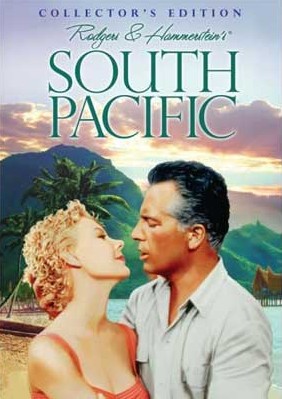
James Michener didn’t publish Tales of the South Pacific until age 40. He became famous for epic historical novels—Hawaii, Iberia, Poland, Texas, Alaska and Mexico—and wrote prolifically until his death at 90.
But he also wrote non-fiction on subjects as diverse as The Modern Japanese Print, Sports in America and A Century of Sonnets.
Before becoming a writer, Michener peddled chestnuts, toured America by boxcar, joined a carnival, enlisted in the Army, taught English, and edited textbooks.
Other late-blooming authors (and their former lives) include:
- Miguel de Cervantes (valet, soldier, tax collector)—Don Quixote, age 58
- Daniel Defoe (wine merchant, terrorist, tax collector)—Robinson Crusoe, age 60
- Charles Perrault (civil servant)—Tales from Mother Goose, age 67
- Bram Stoker (civil servant, theater manager)—Dracula, age 50
- Isak Dineson (coffee rancher)—Seven Gothic Tales, age 49 and Out of Africa, age 52
- P.D. James (civil servant, hospital administrator)—Published her first Adam Dalgliesh mystery in 1962, at age 42.
By far, writers comprise the largest subgroup of Later Bloomers I’ve researched.
The Two Life Cycles of Artistic Creativity
David Galenson is an economics professor who writes about artists.
In Old Masters and Young Geniuses: The Two Life Cycles of Artistic Creativity, Galenson examined the auction prices of paintings throughout several artists’ lives. He identified two distinct patterns, not just in art, but in other creative fields:
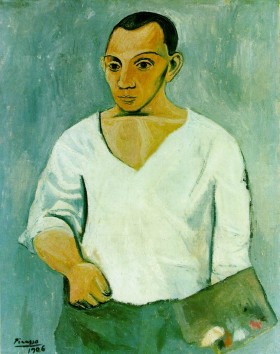
Conceptual innovators peak early. They’re our prodigies and “young geniuses.” They see the whole scenario, then execute it—on canvas, in writing, on a music score sheet.
Picasso is the classic conceptual innovator. Picasso once said,
When I paint, my object is to show what I have found, not what I am looking for…I have never made trials or experiments.
Other conceptual innovators include Johannes Vermeer, Herman Melville, Sylvia Plath and Orson Welles.
Experimental innovators, on the other hand, are classic “old masters” and late bloomers. According to Galenson, they:
- need a visual objective;
- work slowly and incrementally;
- consider their creative endeavors a form of research;
- value the accumulation of knowledge over the result;
- become totally absorbed while pursuing an ambitious, vague and elusive goal; and
- experience frustration that their goal may be unobtainable.
They consider creative output “as a process of searching, in which they aim to discover the image in the course of making it.”
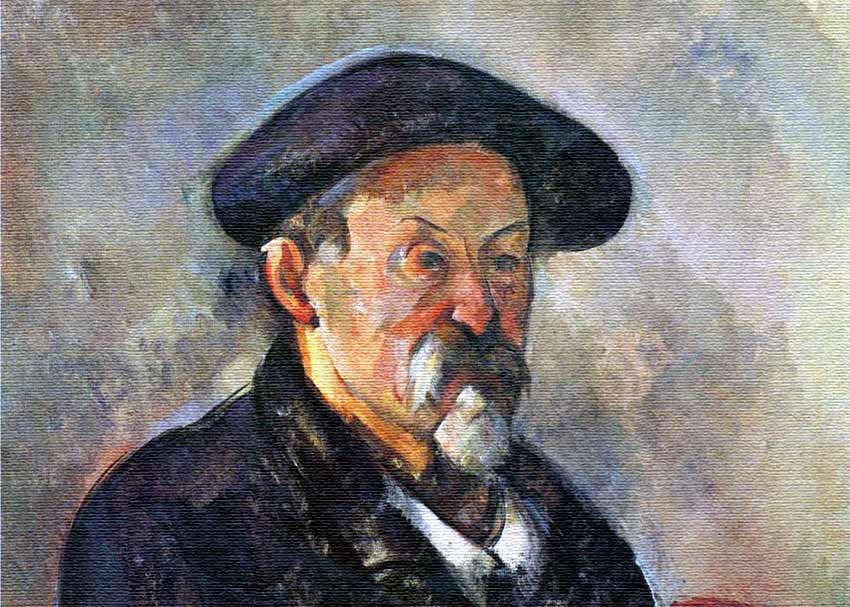
Paul Cézanne is a classic experimental innovator. He created his most valuable paintings (in terms of auction price) at the end of his life. Just a month before he died, Cézanne wrote:
Now it seems to me that I see better and that I think more correctly about the direction of my studies. Will I ever attain the end for which I have striven so much and so long? I hope so, but…until I have realized something better than in the past…I continue to study.
Learning by discovery and experimentation may take longer, but the results will be worth it.
Conclusion
Not all those who wander are lost.
~J.R.R. Tolkien
Curiosity and wonder drive many Later Bloomers. They have too many passions to settle. Plus, as David Galenson discovered, they often learn through discovery and experimentation, so achievement takes longer.
Daniel Pink (Al Gore’s old speechwriter and another lapsed lawyer) had this to say about Galenson’s work:
Of course, not every unaccomplished 65-year-old is some undiscovered experimental innovator. This is a universal theory of creativity, not a Viagra for sagging baby boomer self-esteem. It’s no justification for laziness or procrastination or indifference. But it might bolster the resolve of the relentlessly curious, the constantly tinkering, the dedicated tortoises undaunted by the blur of the hares.
In the end, though, you define success for yourself. What I like about Wikipedia’s late bloomer definition—”a person who does not discover their talents and abilities until later than normally expected”—is the sly implication that normalcy might be superfluous.
Further Reading
I researched the following books and articles for this post and highly recommend them:
- Boyle, Prill. Defying Gravity: A Celebration of Late-Blooming Women
.
- Ehrenreich, Barbara. Bright-sided: How the Relentless Promotion of Positive Thinking Has Undermined America.
- Galenson, David. Old Masters and Young Geniuses: The Two Life Cycles of Artistic Creativity
.
- Gladwell, Malcolm. Outliers: The Story Of Success.
- Gladwell, Malcolm. “Why do we equate genius with precocity?” (The New Yorker: 10/20/2008).
- Kaufman, Scott Barry. “Conversations on Creativity with Daniel Tammet: Part V, Creativity, Mind, and the Brain” (Psychology Today: 10/26/09).
- Lobenstine, Margaret. The Renaissance Soul: Life Design for People with Too Many Passions to Pick Just One
.
- Pink, Daniel. “What Kind of Genius Are You?” (Wired Magazine: 07/2006).