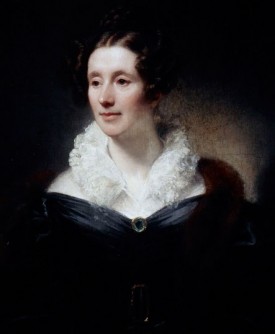
By the time Mary Fairfax Somerville (1780-1872) reached her teens, her father thought she was one step away from a straight jacket.
What had she done? Run with the wolves, set the house on fire, danced raving through the streets?
No, Mary had fallen in love—with mathematics. And it was enough to make her father fear for her sanity.
Despite his censure and that of her first husband, Mary forged a career in math and science. At age 50, she published a treatise so ahead of its time, one of her peers coined a new word for her—scientist. She had proved the old one, man of science, obsolete.
The Wild Child
Mary was a wild child raised by the sea. She often wandered along the Firth of Forth honing her powers of observation:
I knew the names of none of the seaweeds, though I was well acquainted with and admired many of these beautiful plants. I also watched the crabs, live shells, jelly-fish, and various marine animals, all of which were objects of curiosity and amusement to me in my lonely life…
Her father, who later became Vice-Admiral Sir William George Fairfax, returned from a naval tour of duty to find that his nine-year-old daughter could read some Bible verses, but could neither write nor do sums.
He sent Mary to Miss Primrose’s School for a year. Mary considered it a horrid place that beat in learning by rod and by rote. Luckily, it didn’t completely kill her curiosity.
Fears For Her Sanity
Mary also studied music and painting, required accomplishments for her era. Her painting teacher mentioned that Euclid’s theories, which explained perspective in painting, also formed the basis for understanding astronomy and other sciences.
That sounded much more intriguing than parlor skills. Mary persuaded her brother’s tutor to teach her Euclid. Captain Fairfax was aghast:
My father came home for a short time, and, somehow or other, finding out what I was about, said to my mother, ‘Peg, we must put a stop to this, or we shall have Mary in a straight jacket one of these days. There was X., who went raving mad about the longitude!’
He was serious. The accepted “wisdom” of the time warned that too much intellectual stimulation could drive a woman insane.
Mary’s mother instead encouraged her to attend tea parties, practice her dance steps, and peruse fashion magazines.
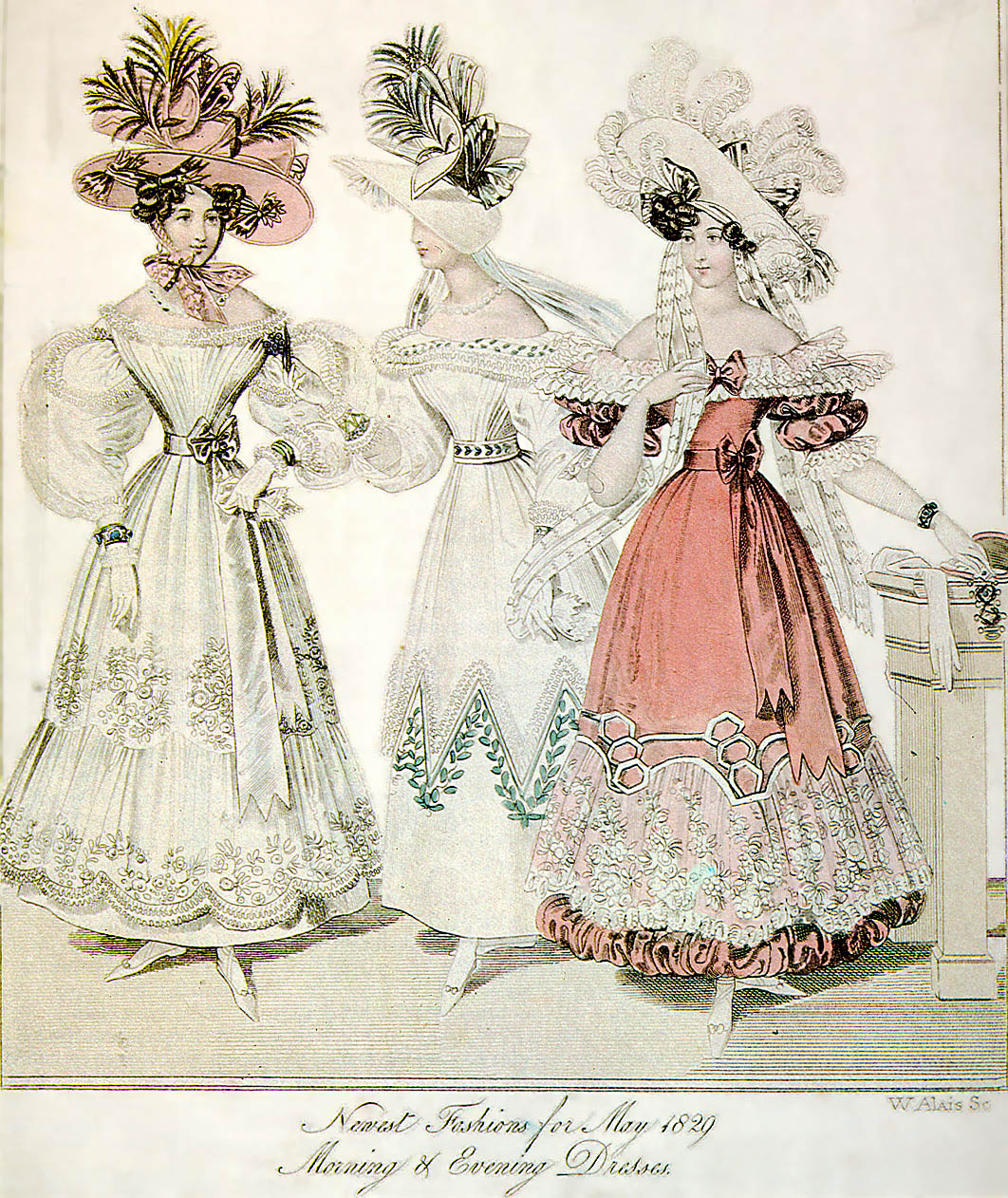 Ladies’ periodicals often contained puzzles. Mary tried to solve what looked like a simple math problem in one, only to find the answer full of exotic symbols.
She discovered they were algebra equations. Intrigued, she commenced a life-long course of study.
Her parents, at wit’s end, wed Mary to a distant cousin, Samuel Grieg, when she was 24. Her new husband had a low opinion of women’s intelligence and forbade Mary’s studies.
Grieg died three years later, leaving Mary with two young sons. But as a widow, she was free to do as she wished.
Love and A Life’s Calling
Upon returning to Scotland, Mary corresponded with Dr. William Wallace, professor of mathematics at the University of Edinburgh.
Wallace guided her study of math and astronomy and encouraged her to read Newton’s Principia and Laplace’s Mécanique Céleste (the latter would change her life). He also suggested which books she should buy for her personal science library.
I could hardly believe that I possessed such a treasure when I looked back on the day that I first saw the mysterious word ‘Algebra,’ and the long course of years in which I had persevered almost without hope. It taught me never to despair. I had now the means, and pursued my studies with increased assiduity; concealment was no longer possible, nor was it attempted.
In 1812, at age 32, Mary wed her first cousin William Somerville, a hospital administrator, who shared and encouraged her love of knowledge. They had four children together.
The couple moved to London, where Mary met the greatest minds of her time, including inventor Charles Babbage and astronomer William Herschel. She became Ada Byron’s first mathematics tutor.
(Some circles credit Ada, Lord Byron’s daughter by his estranged wife, with originating the concept of software programming. The U.S. Department of Defense named their ADA programming language after her.)
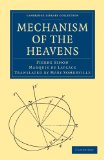 In 1827, the Society for the Diffusion of Useful Knowledge requested that Mary translate Laplace’s Mécanique Céleste. She went beyond the assignment, however, and explained the equations. At the time, many English mathematicians didn’t understand them.
In 1831, John Murray published her translation, Mechanism of the Heavens. It reaped both financial and critical success and established her in the scientific community. Mary was past 50.
In 1835, the Royal Astronomical Society made Mary and Caroline Herschel their first female members.
Mary also wrote On the Connexion of the Physical Sciences (1834), Physical Geography (1848), and Molecular and Microscopic Science (1869). She completed the latter in her late 80s.
In reviewing Connexion, William Whewell coined the word scientist to describe Mary. She had rendered the general term men of science obsolete.
Mary’s daughter, Martha Somerville, published Mary’s autobiography after her death at age 92.
Martha noted that despite the hours her mother spent studying and writing, she home-schooled her daughters in math and science, and engaged tutors for them in other subjects. She wanted to assure they never experienced a Miss Primrose’s School.
Throughout her life, in fact, Mary championed education for women. Oxford University named Somerville College in her honor.
From being considered illiterate as a child and mad for studying math, to becoming the UK’s first “scientist,” Mary Somerville never let popular opinion deter her. That, and a magnificent stubbornness, helped her prevail.
Sometimes I find [mathematical problems] difficult, but my old obstinacy remains, for if I do not succeed today, I attack them again on the morrow.
Sources
- All quotes from Mary Somerville’s Personal Recollections at Project Gutenberg.
- John H. Lienhard of the University of Houston writes and hosts an amazing radio series called The Engines of Our Ingenuity. His Mary Somerville segments include No. 224 and No. 1934.